
Proposal / April 2026
From Post-Launch to Peak Season
Embedded product partnership to recover conversion, stabilize the platform, and build a world-class digital product organization before peak season hits.
Embedded product partnership to recover conversion, stabilize the platform, and build a world-class digital product organization before peak season hits.
Avis launched its new digital platform across web and mobile: a bold move. But conversion rates have dropped post-launch, the product organization is undersized, and peak summer travel is approaching fast. The window to act is narrow.
Mandatory all-in pricing display has introduced friction in the booking funnel. Every percentage point matters heading into summer.
Product and design leadership gaps limit optimization speed. PMs are double-dipping on CRO. Analytics, experimentation, and design are siloed.
BCG support is effective but not sustainable long-term. Prior engagements with Infosys and EPAM did not deliver the outcomes needed.
Separate systems for app and web, built by two different agencies, need unification under coherent governance. CRO tooling has consolidated from Optimizely plus Adobe Target to Adobe Target only, but test velocity remains low.
A fully staffed digital product function operating as an embedded extension of your team: driving conversion recovery, platform stabilization, and proposition improvements across web and app. A CRO program running at velocity. A unified design system taking shape. Documented processes and playbooks. And a clear, structured path to transition all of this work to your permanent hires, leaving Avis self-sufficient and stronger.
Our people integrate directly into your workflows, tools, standups, and sprint rituals. We build capability, not dependency; following the same bell-shaped engagement model we used with the NHL.
Address the immediate conversion crisis and platform stabilization needs before summer peak.
Drive proposition improvements, international rollout, and CRO program maturation at full velocity.
Systematically transition ownership to Avis permanent hires with structured knowledge transfer and documented playbooks.
We don’t just deliver work. We build the systems and processes that allow Avis to sustain it after we leave.
Clear hypothesis frameworks, prioritization models, and reporting structures that keep experiments flowing at the velocity the program demands.
Connect experimentation data to business decisions so your product analysts and CRO specialists operate as one function, not two silos.
Help the design team create a unified system that serves both app and web, with documented standards and a contribution model.
Processes, decision frameworks, and institutional knowledge that become Avis’s, not ours, when the engagement ends.
The delivery pods can be organized by Platform, or by Flow, and the team size can flex up and down based on the desired scope and velocity.
| Dedicated e-commerce leadership | |||
| Ship conversion experiments and bug fixes at pace | |||
| Autonomous pods producing experiment variants for CRO | |||
| Design system unification as a first-class workstream, not side-of-desk | |||
| Dedicated CRO Lead and UX Researcher own test strategy, statistical rigor, and qualitative insight across both pods |
Track 1: Delivery. The pods shipping conversion experiments, proposition improvements, and CRO results every sprint. Track 2: Capability Building. The systems, processes, and tools Avis keeps permanently: design system, experimentation framework, playbooks, knowledge transfer. What changes across options is the scope of Track 2. In any case, efforts are led by a world-class e-commerce Product leader.
View the dual-track modelStart with Option B. The conversion work is urgent and the design system work is foundational. Doing both in parallel is the dual-track model in action. If the CRO program reveals that the booking funnel needs deeper customer insight than analytics alone can provide (and it likely will), scale to Option C by adding the Experimentation & Insights platform in Phase 2. The restructure from embedded CRO specialists to a centralized CRO Lead mirrors what the best experimentation orgs (Booking.com, Airbnb) have found: centralized strategy + decentralized execution produces the highest aggregate test velocity.
| Dedicated e-commerce leadership | |||
| Each team owns end-to-end customer flows across app + web, eliminating handoffs between platform silos | |||
| Cross-platform consistency by default: one team, one flow, one standard | |||
| Scales cleanly: add a Team C for a new flow without reorganizing existing pods | |||
| Design System Lead ensures both teams build with shared primitives, not one-off screens | |||
| Dedicated CRO Lead and UX Researcher centralize experimentation strategy and feed qualitative insight directly into flow teams |
Track 1: Delivery. The pods shipping conversion experiments, proposition improvements, and CRO results every sprint. Track 2: Capability Building. The systems, processes, and tools Avis keeps permanently: design system, experimentation framework, playbooks, knowledge transfer. What changes across options is the scope of Track 2. In any case, efforts are led by a world-class e-commerce Product leader.
View the dual-track modelStart with Option B. Flow-based pods ensure each team owns the customer journey end-to-end. The booking experience doesn’t split at the platform boundary. The Design System Workstream gives both teams a shared foundation so experiments compound across flows. If deeper customer insight is needed (and it likely will be), scale to Option C by adding the centralized Experimentation & Insights layer. This mirrors what Spotify, Airbnb, and Booking.com have found: stream-aligned teams with centralized strategy produce the highest test velocity and the most consistent user experience.
Execute your backlog with dedicated pod teams
Add a design system workstream to reduce long-term drift
Experimentation as its own team so insights compound across flows
Track 1: Delivery. The pods shipping conversion experiments, proposition improvements, and CRO results every sprint. Track 2: Capability Building. The systems, processes, and tools Avis keeps permanently. What changes across options is the scope of Track 2.
Start with Option B. The conversion work is urgent and the design system work is foundational. If the CRO program reveals deeper customer insight needs, scale to Option C by adding the Experimentation & Insights platform in Phase 2.
Execute your backlog with dedicated pod teams
Add a design system workstream to reduce long-term drift
Experimentation as its own team so insights compound across flows
Track 1: Delivery. The pods shipping conversion experiments, proposition improvements, and CRO results every sprint. Track 2: Capability Building. The systems, processes, and tools Avis keeps permanently. What changes across options is the scope of Track 2.
Start with Option B. Flow-based pods ensure each team owns the customer journey end-to-end. The Design System Workstream gives both teams a shared foundation. If deeper customer insight is needed, scale to Option C by adding the centralized Experimentation & Insights layer.
Based on similar projects, here’s an initial phase breakdown which we can refine as we learn more about Avis.
Onboard team, audit current state, address critical conversion issues, begin CRO testing program. Quick wins on conversion, baseline design metrics established.
Example Activities: Booking funnel UX audit & redesign roadmap; design system gap analysis (app vs. web inventory); first 2–3 CRO experiment variants designed
Drive booking funnel optimization, increase test velocity, begin design system unification, deliver proposition improvements. Measurable conversion lift.
Example Activities: Unified component library v1; CRO experiment pattern catalog (reusable variant templates); checkout & payments flow redesign specs
Tackle backlog at scale, support international web rollout, build internal processes and playbooks, intensify knowledge transfer. Design system governance operational.
Example Activities: Design system contribution guide & governance docs; international market adaptation templates; design team playbook (review cadences, handoff protocols)
Gradual handoff as permanent hires come onboard. Reduce allocation, provide transition support. Self-sufficient team, clean handoff.
Example Activities: Complete design system with usage documentation; all files organized, annotated & transferred; onboarding guide for future design hires
Two separate design systems, one for app and one for web, built by two different agencies. Every screen becomes a one-off decision. Every CRO experiment built from scratch. Test velocity drops. Experiment results don’t transfer between platforms.
When CRO specialists pull from a library of pre-built, tested components, you run more tests in less time. Our work with Virgin Voyages produced 8 A/B tests in 12 weeks. That speed depends on reusable design assets.
A design system with documented responsive behavior, token-based theming, and locale-aware components makes each new market launch faster and cheaper than the last.
Your design team just grew from 2 to 4. A design system gives new members guardrails that make them productive on day one. Without it, every new hire introduces their own interpretation and design debt compounds faster.
This is not a multi-year initiative. A Design System Lead working with an Avis Design Manager can audit the two existing systems, define the unified token set and component library, and establish the governance model within the first 8–12 weeks. The system grows incrementally: every component built for a delivery sprint gets contributed back.
A long queue of proposition improvements sits waiting for the team capacity to execute. Each one represents real, measurable commercial upside, but they compound in value only when they ship.
Insurance, upgrades, add-ons, and extras that increase basket size at checkout. These are proven revenue levers in travel, and the funnel work just needs to get done.
Avis Preferred integration into the digital experience. Loyalty drives repeat bookings and lifetime value, but only if the digital touchpoints surface the right incentives at the right moments.
The booking funnel is where revenue lives or dies. Payment flow streamlining, form reduction, trust signals, and friction removal across both web and app to recover and grow conversion rates.
These are not future initiatives. They are current backlog items that have been scoped and prioritized but lack the product, design, and CRO bandwidth to execute.
We establish baselines early and report against them every sprint. These are directional indicators we refine together, not rigid targets.
How many CRO experiments move from concept to launch each sprint. A leading indicator of whether the team is operating at the velocity the program needs.
How long it takes to move from design kick-off to a dev-ready spec. Helps surface process bottlenecks and track whether they improve over time.
The proportion of new screens built from existing design system components vs. from scratch. A useful proxy for whether the design system is gaining traction.
Periodic review of visual and interaction patterns between app and web. Starts as a gap analysis, evolves into a governance check as the unified system matures.
The workflows established now will determine your team’s throughput ceiling for years. AI-assisted design tools have matured to the point where they meaningfully change the ratio of thinking to production. Designers spend less time on mechanics and more time on decisions that require human judgment.
For a team running CRO experiments at velocity while simultaneously building a design system across two platforms, that shift matters. Faster variant turnaround, automated documentation, and streamlined handoff all compound over every sprint.
Audit Avis’s current design toolchain
Identify 2–3 highest-impact points for AI-assisted automation
Implement at least one working proof of concept (likely variant generation or design system documentation)
Small investment in the Design System Lead’s time. Compounding return is not small.

Digital transformation and booking experience redesign for a global mobility company. Directly analogous to Avis: complex booking funnel, global operations, modernized digital experience.
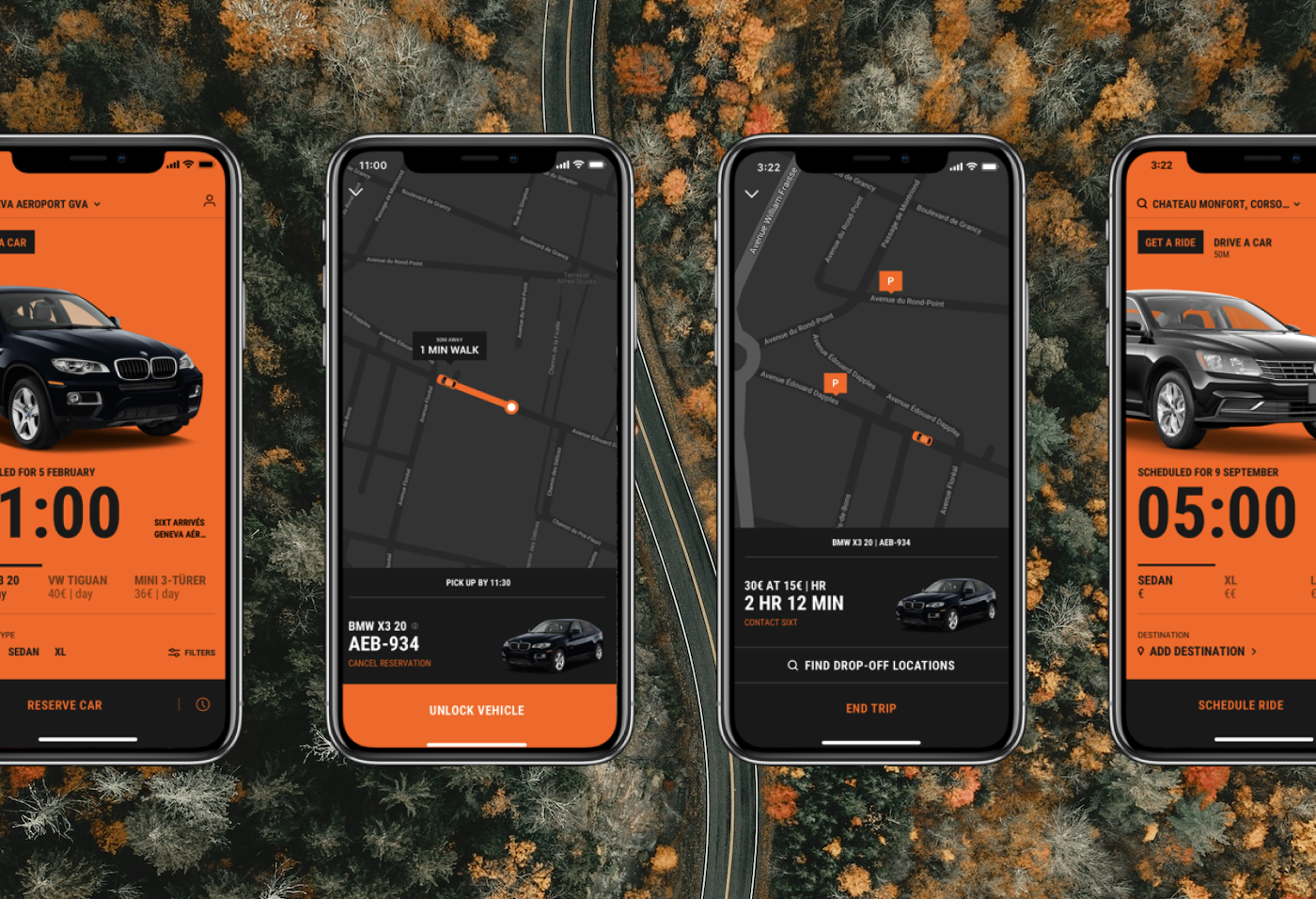

Mobile-focused A/B testing program demonstrating the CRO and conversion optimization expertise Avis needs.
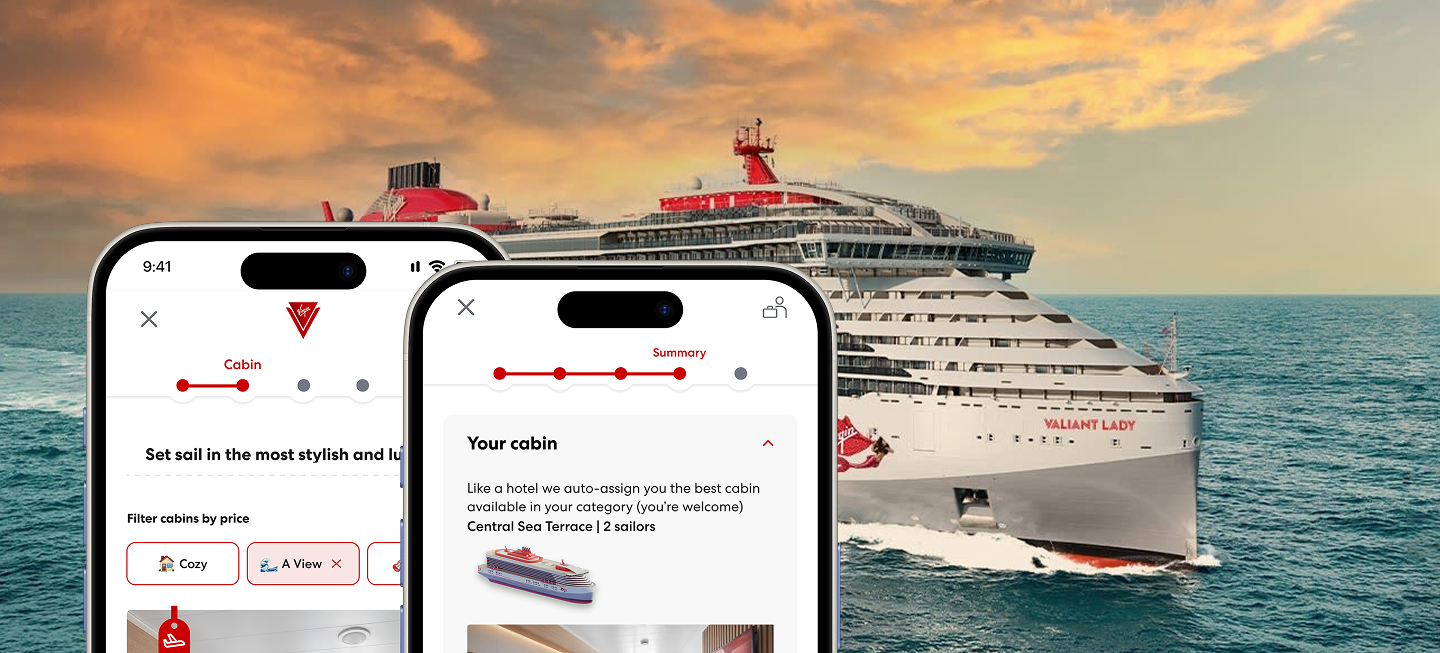

Augmented the digital team during transition, enhanced fan experience, maintained velocity, and systematically built capability for self-sufficiency. The exact engagement model.

Measurable commercial outcomes in high-volume digital commerce environments.
Monstarlab is a global digital product consultancy with 1,400+ employees across 33 offices worldwide, partnering with brands like Amazon, Walmart, HSBC, Mastercard, Visa, and Sony. We are consultants and digital software creators, not resellers.
We design for the people who use the products, not for internal stakeholders. Every decision starts with the customer journey.
We do not optimize on instinct. Every recommendation is grounded in data, every test has a clear hypothesis, and every result is measured.
The faster you learn, the faster you win. We bring the process discipline to run experiments at the cadence Avis needs.
Product strategy, design, analytics, CRO, and delivery integrated as one function, not parceled out across disconnected workstreams.
We're built for exactly this moment: embedded product partners who drive measurable outcomes and build the capability that makes speed sustainable.